 0800 113 191
 info@redinspect.co.nz
Case Study: Tracking Down a Leaking Shower
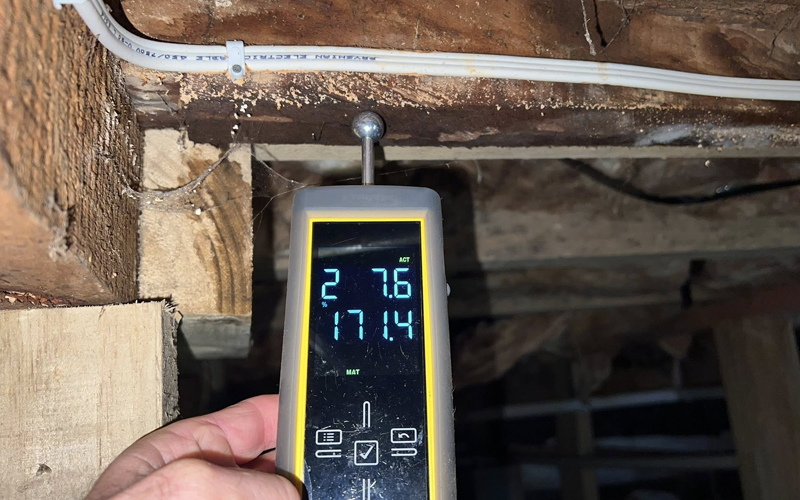
Bathrooms are one of the hardest-working parts of any home, and they’re also one of the most common places where hidden damage occurs. A leaking shower may not seem like a big deal at first, but water has a way of getting into places it shouldn’t and by the time you can see it, the damage may already be significant.
That’s exactly what one Tauranga homeowner discovered when they booked a Red LBP Condition Report to investigate a suspected shower leak.
The Situation
The homeowner had noticed damp carpet just outside the bathroom door. At first, they thought it might be a spill or wet feet from the kids after showers. But when the damp patch kept reappearing, even after cleaning and drying, they knew something more was going on.
A plumber had suggested simply resealing the shower tray, but the homeowner wasn’t convinced that would solve the problem. They wanted an independent assessment that would clearly show whether there was hidden damage and how far it had spread. That way, they could brief the trades properly and avoid paying for patch jobs that wouldn’t last.
The Condition Report
A Red LBP inspector carried out a full Condition Report focused on the bathroom and surrounding areas. Using a combination of visual checks, moisture meters, and thermal imaging cameras, the inspector looked beyond what the eye could see.
The thermal imaging camera picked up temperature variations in the wall lining behind the shower, a tell-tale sign of trapped moisture. These results were then cross-checked with moisture meter readings, which confirmed elevated levels in the framing.
The report also documented:
- A compromised waterproofing membrane – likely original from the 1990s and no longer effective.
- Early-stage timber rot – in the bottom plate, where water had been seeping in unnoticed for years.
- Minor mould growth – starting to form behind the gib board, invisible from inside the bathroom.
All of this was carefully photographed and included in the report, with thermal images side-by-side with visible light photos to show exactly where the leak was spreading.
The Findings
The Condition Report made it clear that the leak wasn’t new and wasn’t going to be solved with a quick reseal. The damage had been progressing slowly for years. While it hadn’t yet reached the stage of significant structural failure, the longer it was left the worse it would become.
This independent assessment gave the homeowner a full picture of the problem. Instead of relying on guesswork or piecemeal fixes, they now had hard evidence that repairs needed to go beyond the surface.
The Outcome
With the Condition Report, the homeowner was able to brief their builder and tiler properly. The repair plan included replacing the compromised framing, installing new waterproofing, and re-tiling the shower enclosure. Because the report was independent and thorough, with photos, readings, and thermal images, the insurance company also accepted the claim without dispute, saving the homeowner thousands in repair costs.
The project was completed quickly and to a high standard, with no nasty surprises uncovered along the way. Most importantly, the homeowner had peace of mind that the problem was solved at its source and wouldn’t come back to haunt them later.
The Takeaway
A leaking shower is easy to underestimate, but water damage is one of the biggest threats to the health of a home. By using advanced tools like thermal imaging cameras alongside moisture meters and licensed building knowledge, a Red LBP Condition Report takes the uncertainty out of the situation. For this Tauranga homeowner, it meant the difference between patching over the symptoms and fixing the real problem. That’s the value of independent, evidence-based assessment, confidence, clarity, and a home that’s safe and sound for the long term.
READ SOME OF OUR OTHER RECENT BLOGS
Case Study: Supporting Tenancy Issues
Tenancy disputes often come down to “he said, she said.” Without hard evidence, it can be difficult for tenants or landlords to prove who is responsible when maintenance problems arise….

Case Study: Independent Flood Damage Assessment
Flooding leaves more than mud and water stains, it leaves uncertainty. Homeowners are often left wondering what’s repairable, what’s a write-off, and how to prove the extent of the damage…
Case Study: Relocatable Homes – Meeting Council Requirements
Relocating a house can be a cost-effective way to get into your dream home, but it’s not as simple as calling in a truck and crane. Councils across New Zealand…

Case Study: Protecting Against Construction Impact
When major construction happens next door, even the best-built homes can be affected. Heavy machinery, ground vibration, and constant traffic can all cause damage that isn’t obvious until cracks start…